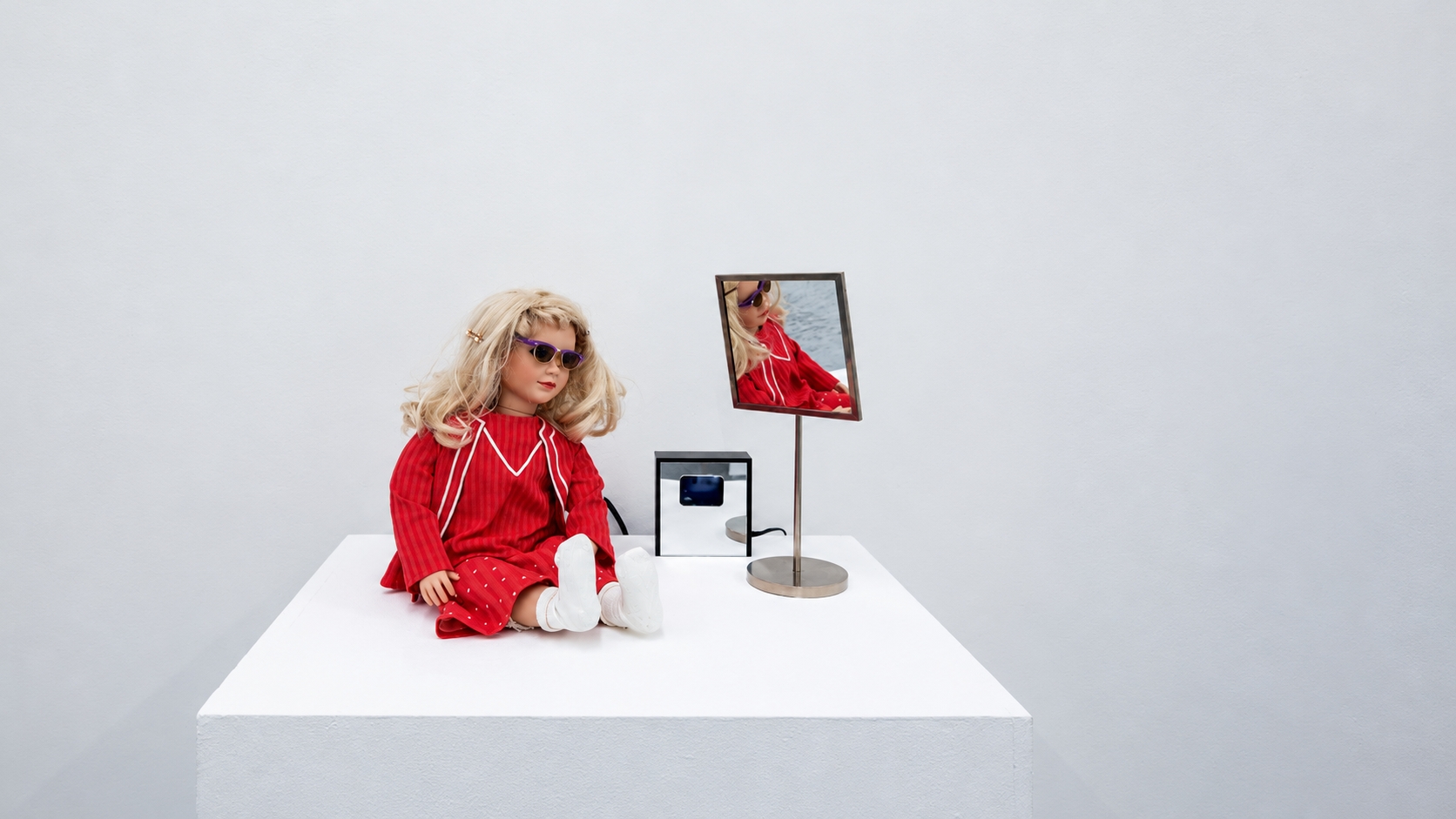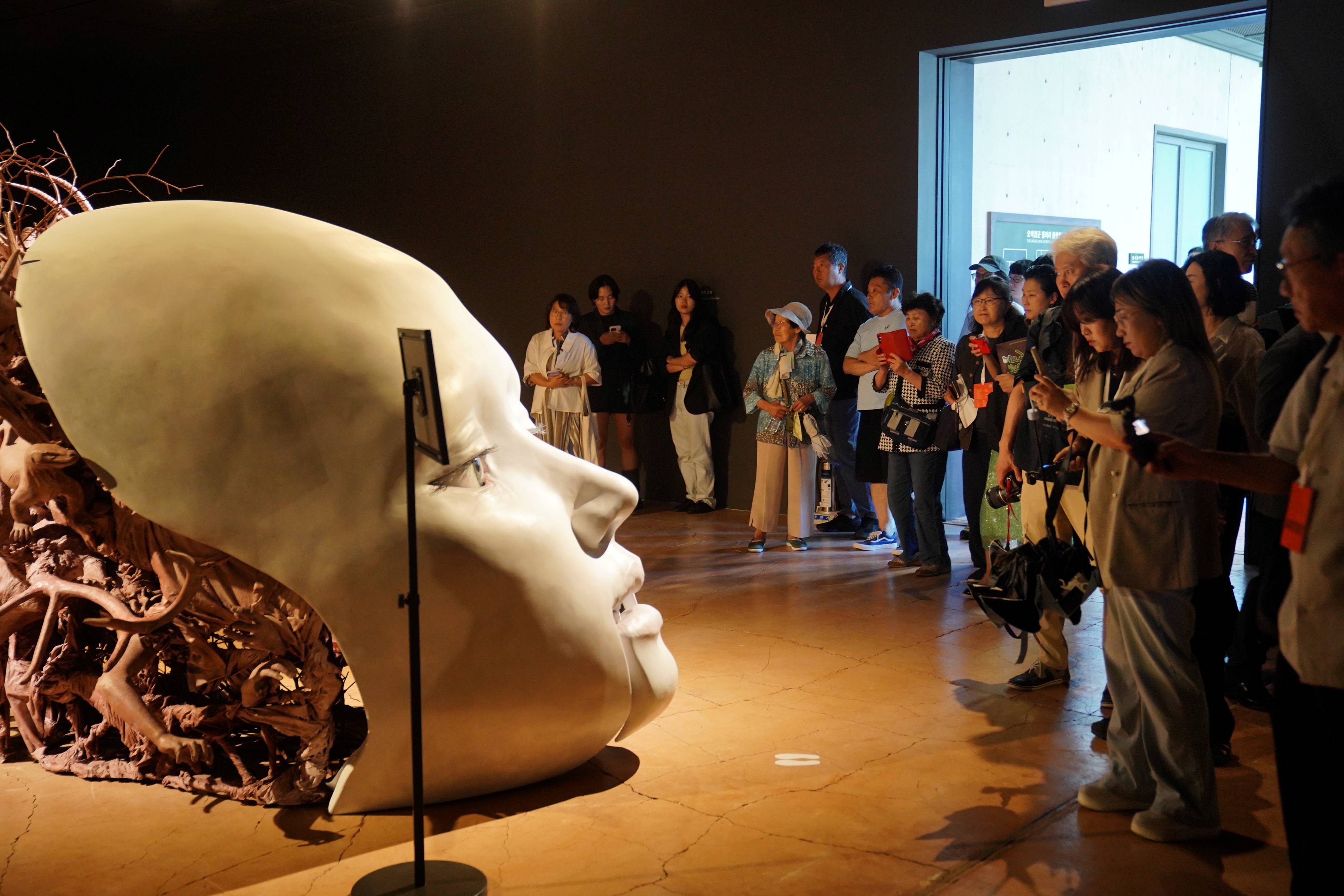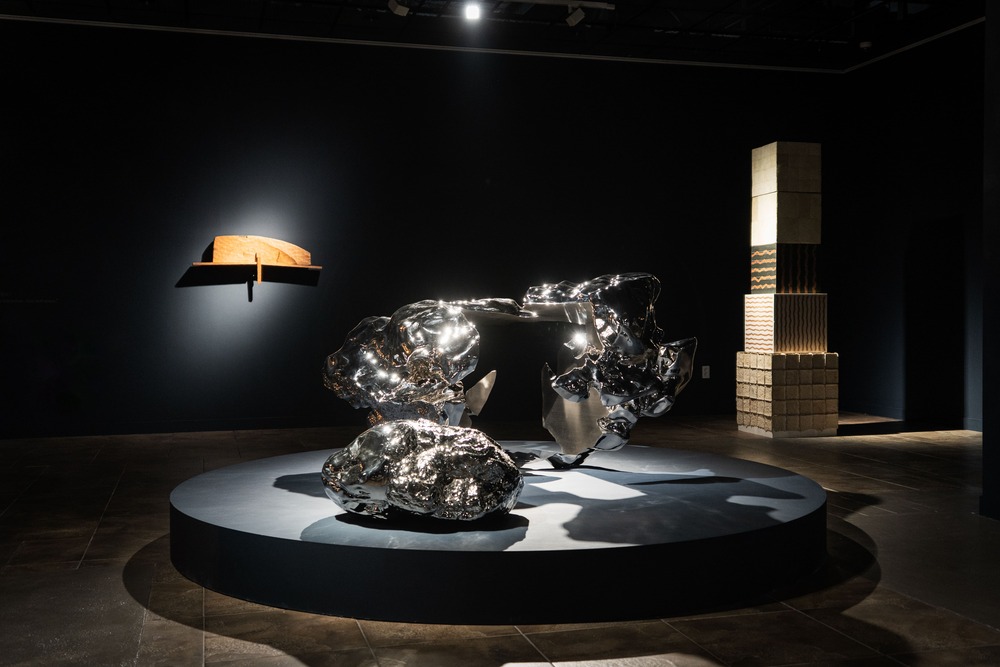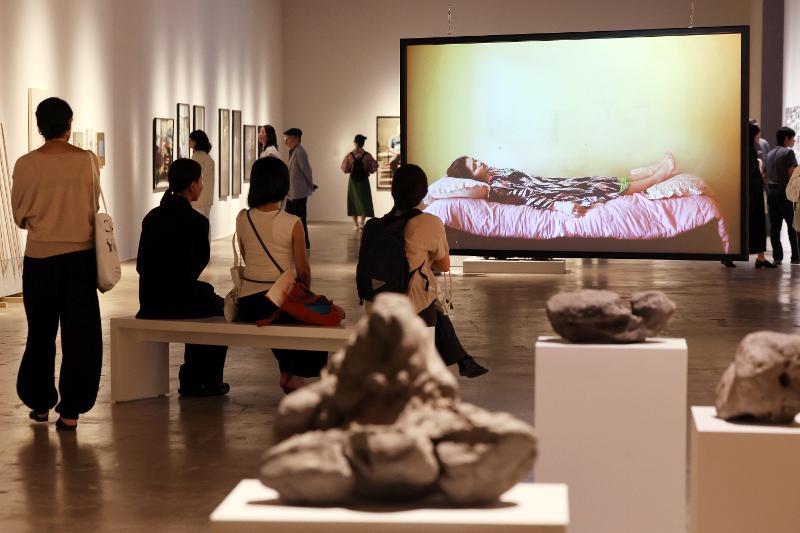

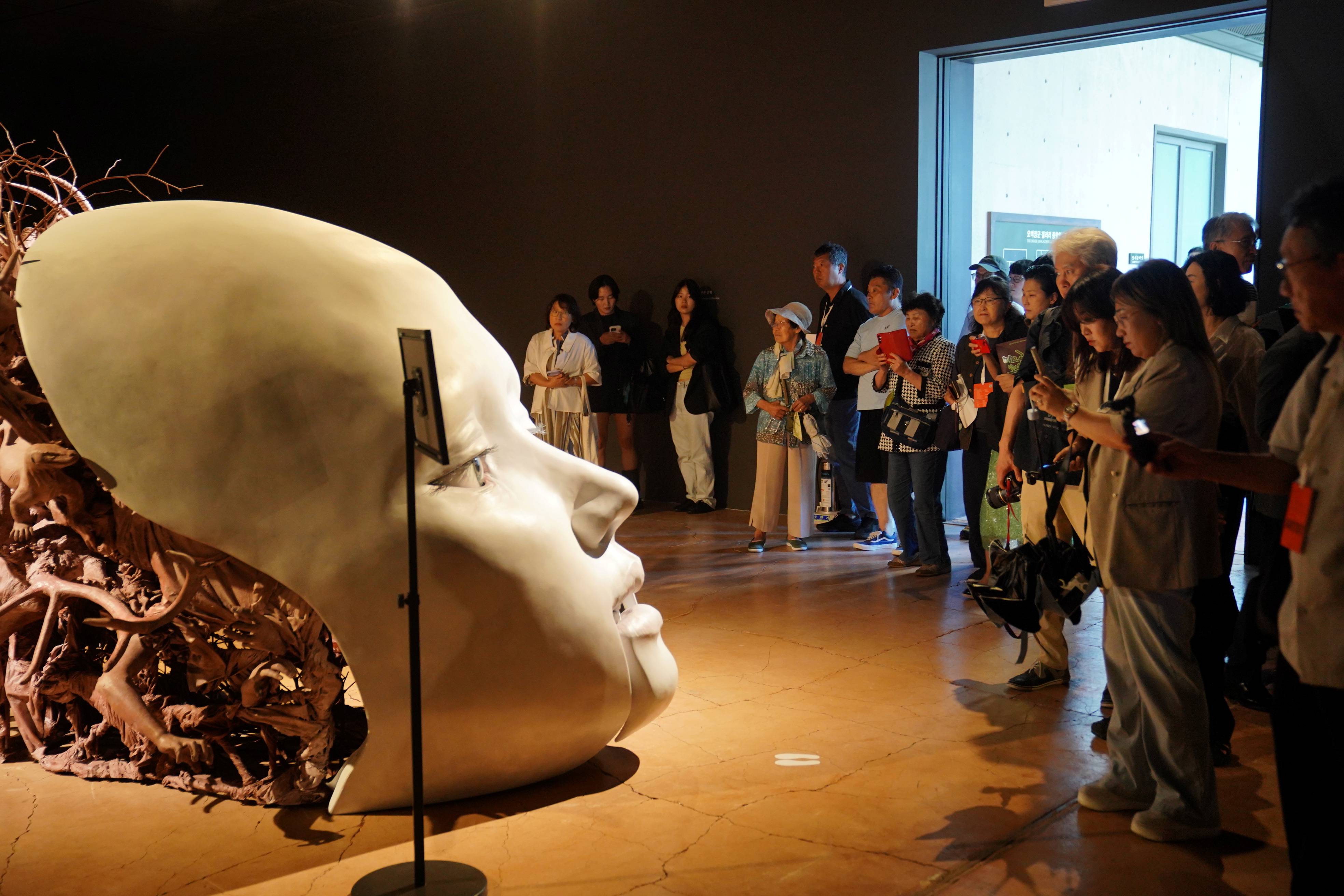
Exhibition view of the 5th Jeju Biennale © Jeju Biennale
The
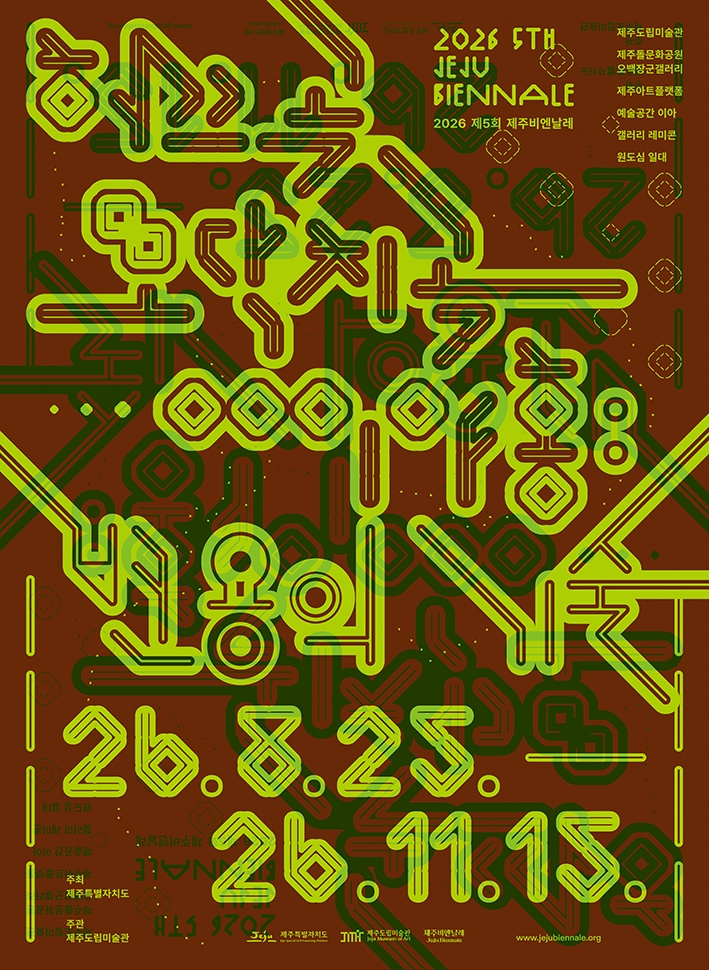
5th Jeju Biennale held its opening ceremony on August 24, marking the beginning
of an 83-day journey.
Organized
by Jeju Special Self-Governing Province and hosted by the Jeju Museum of Art,
the 5th Jeju Biennale, 《Iyahong: The Art of Metamorphosis》, brings
together 69 artists and teams from 20 countries. LEE Jong Hoo, Director of the
Jeju Museum of Art, serves as the artistic director.
The
biennale is presented across five venues: the Jeju Museum of Art, Obaekjanggun
Gallery at Jeju Stone Park, Jeju Arts Platform, Art Space IAa, and Gallery
Remicon.
Taking
“Iyahong” (the refrain of a Jeju folk song) as its central concept, the
Biennale embodies the metamorphic process of flowing, mingling, and being
reborn. Through Jeju as an island of metamorphosis, it presents the modes of
survival and aesthetics cultivated in the coexistence and symbiosis of things
and nature, humans and deities.
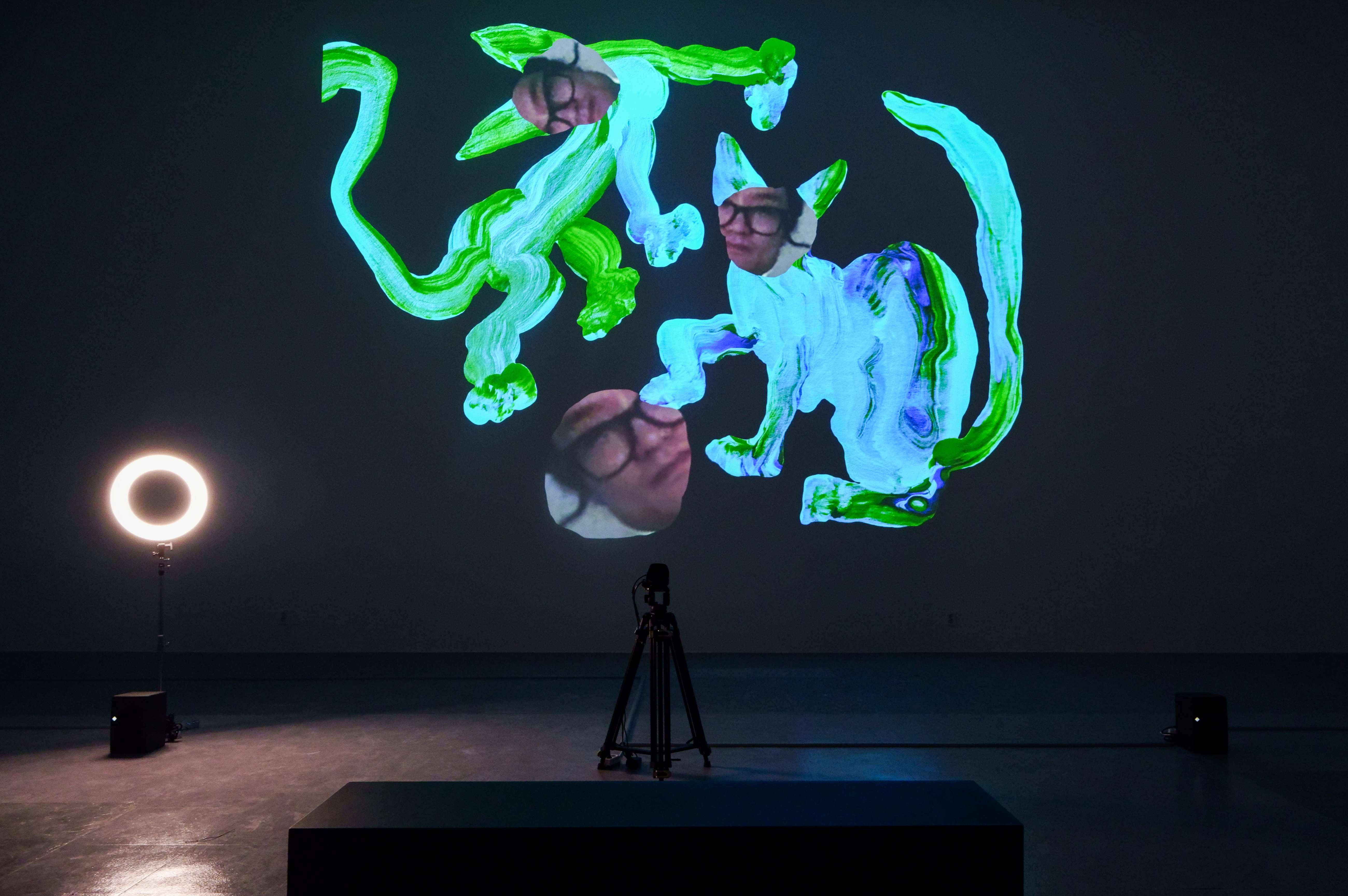
Vincent MORISSET+Caroline ROBERT, TERRA, 2026, Audience-participatory interactive media and sound installation © Jeju Biennale
The
exhibition is divided into three sections: “Human,” “Stone,” and “Deities.”
At
the Jeju Museum of Art, “Human” takes Chusa Kim Jeong-hui’s
exile to Jeju as its point of departure, examining how periods of isolation and
disconnection can be transformed into new artistic languages. The first floor
focuses on the artistic legacy Chusa developed during his exile on Jeju, while
the second floor expands the theme to contemporary issues involving refugees
and displaced migrants.
“Stone,”
presented at Obaekjanggun Gallery at Jeju Stone Park, explores the layers of
time and memory embedded in Jeju’s basalt and stone walls.
“Deities,”
presented across Jeju Arts Platform, Art Space IAa, Gallery Remicon, and other
venues in Jeju’s old downtown area, rereads Jeju mythology and communal memory
through a contemporary language. In this sense, the entire old downtown area,
shaped by generations of local residents’ lives, becomes an exhibition space.
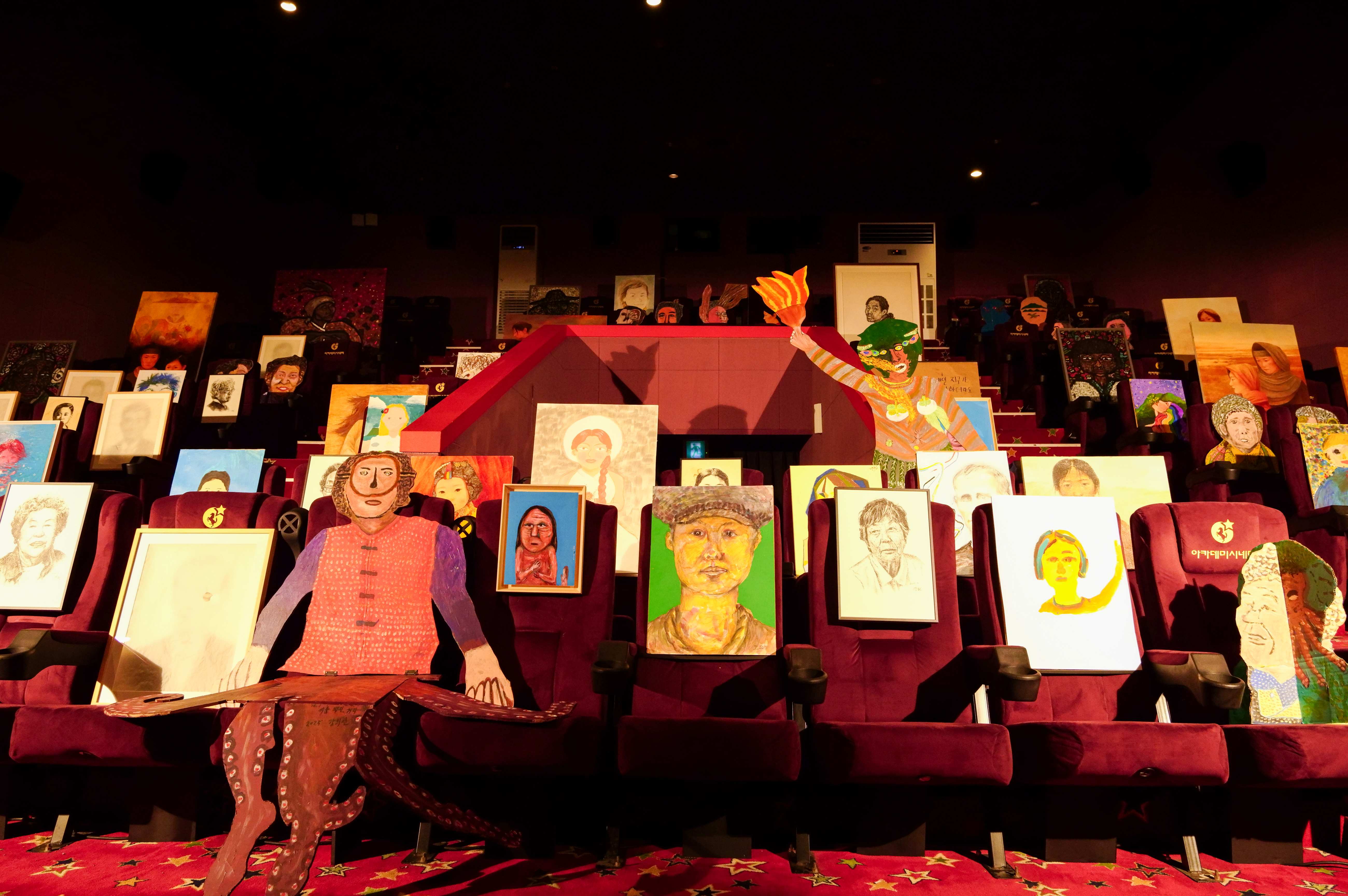
Zhanna KADYROVA’s Performances VI (2026). Centering on the recovery and solidarity of nature and communities devastated by war, the work reconfigures a participatory project that the artist has continued since 2015 within the context of Jeju. Works created through portrait workshops with Jeju residents fill the seats of the former theater at Jeju Art Platform. © Jeju Biennale
Following
the 4th Jeju Biennale, which explored Jeju’s connections with southern cultures
through the theme of “drifting,” the 5th Jeju Biennale expands its focus
northward to examine another current through which Jeju civilization has
evolved.
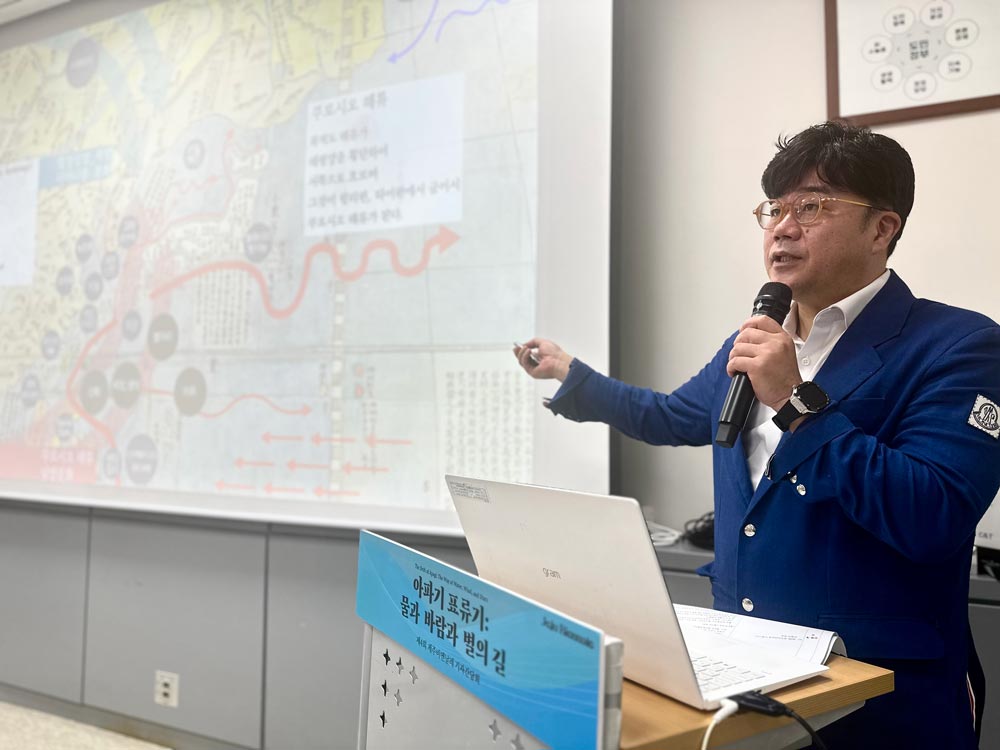
Artistic
Director LEE Jong Hoo explained, “While the previous biennale examined Jeju’s
connections with southern cultures through drifting, this edition seeks to
explore the historical links between Jeju and northern cultures through exile,
mythology, and stone culture. Through the ‘art of metamorphosis’ created as
different cultures have mingled and converged in Jeju, we aim to speak about
the coexistence of humans and nature.”